Ten AI agents rebuild your classic SharePoint — start to finish.
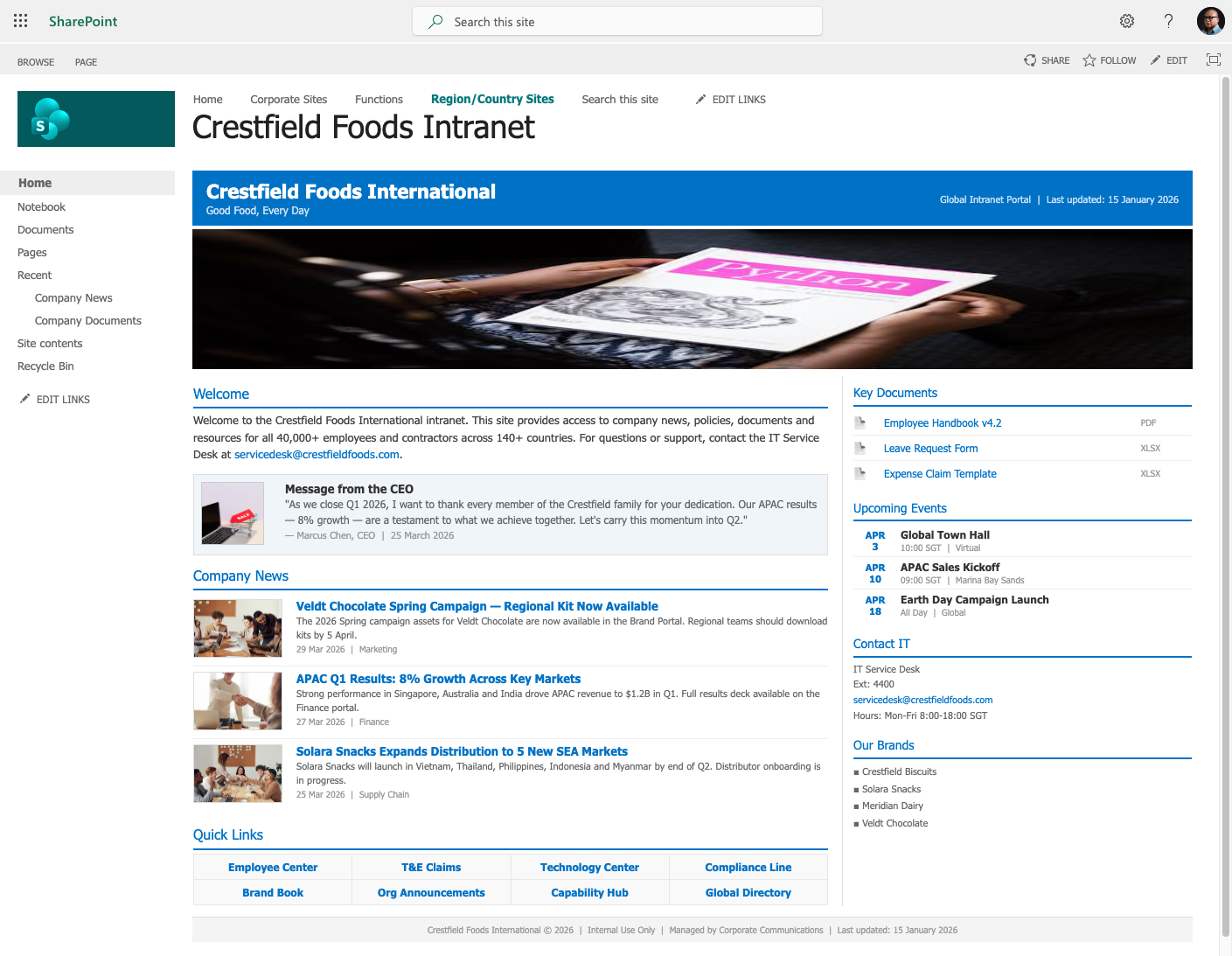
An autonomous pipeline captures the old site, scores every page, and composes a modern SharePoint replica — held to 1.00 copy fidelity by a verify gate no agent can cheat.
The problem
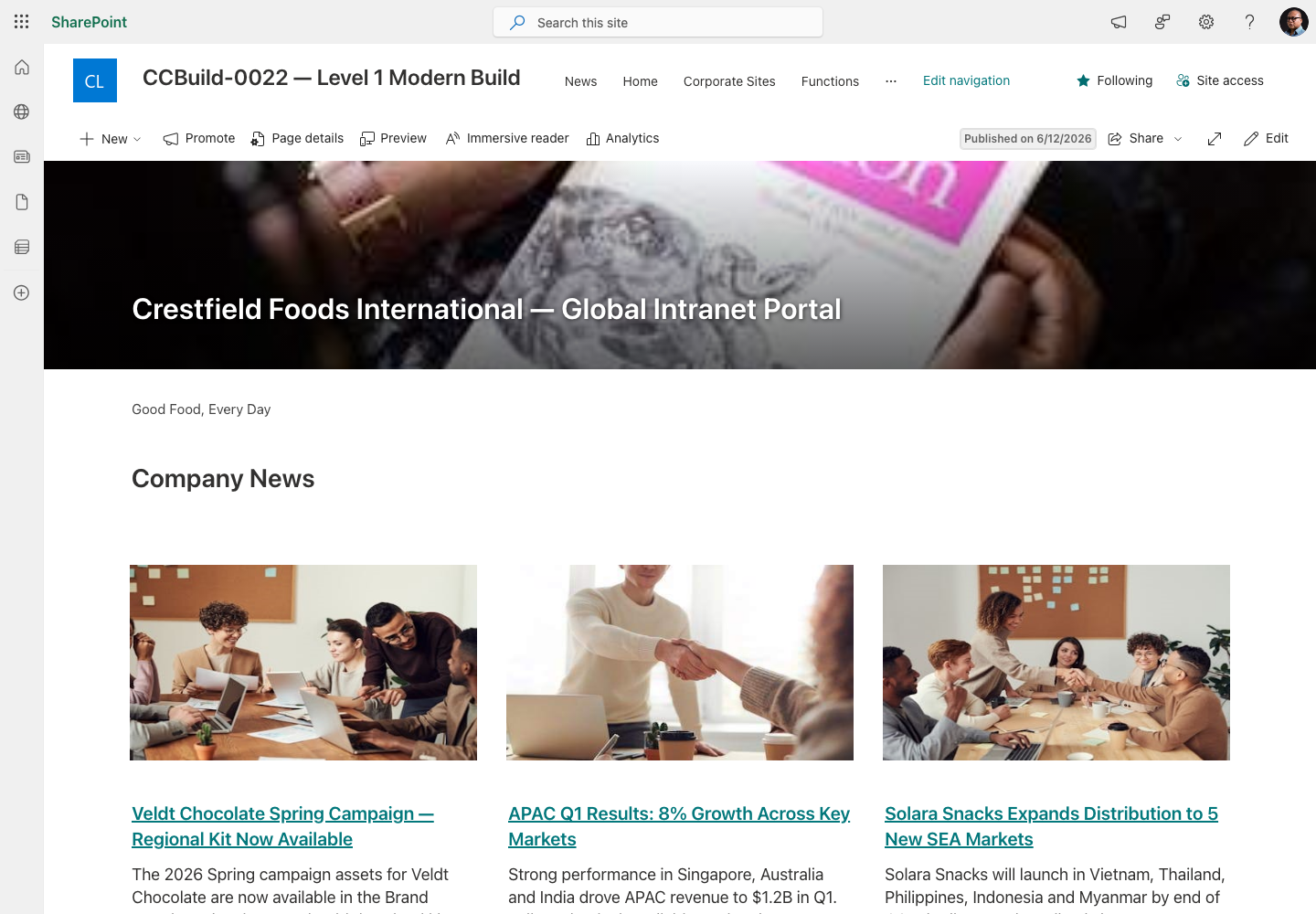
Classic → modern is a months-long, manual slog.
Thousands of organizations still run classic SharePoint intranets — dated, unresponsive, on a platform Microsoft is winding down. Migrating them is done by hand, page by page: an agency reads the old site, re-keys every page, and hopes nothing was dropped. It's slow, expensive, and “did we carry everything over?” gets answered by eyeballing, not evidence.
SPARK runs the whole migration as one autonomous job — and proves the result.
Before / after
Drag to see the rebuild
The proof
Verified, not claimed.
DEMO-0022·copy fidelity 1.00
16/16 pages matched · 0 missing zones · 0 dropped assets
Copy fidelity = a deterministic diff of every source content zone against the rebuild — 1.00 means nothing was dropped.
The fail-closed verify gate diffed every rebuilt page against the source and opened only on a full content match.
The pipeline
13 stages, intake to closeout
Every stage is a specialized agent. The run only completes if the fail-closed verify gate passes — no agent can wave its own work through.
- 1
Intake
Delivery LeadParse the client request, open the job card, and lock the run scope.
- 2
Verify Access
Security & GovernancePreflight the source and target tenants before any read or write.
- 3
Capture Classic
SharePoint EngineerCrawl the classic site and snapshot every page, zone, and asset.
- 4
Audit
Product ManagerBuild the content tracker: classify every asset and log pain-points.
- 5
Score & Tier
ArchitectScore each page by reach and freshness, then bucket into 3 tiers.
- 6
Notify
Delivery LeadPost the tiered plan to Teams and ping the operator for the go-ahead.
- 7
Migrate Images
DevOps DeployUpload usable images; flag low-res ones for rewrite or SVG swap.
- 8
Compose Pages
SharePoint EngineerRebuild each interior page as modern web-part sections.
- 9
Compose Homepage
SharePoint EngineerAssemble the flagship homepage with hero, news carousel, and nav.
- 10
Style & Brand
UX DesignerApply the Crestfield theme, fonts, and 'Good Food, Every Day' voice.
- 11
Verify Gate
QA EngineerFail-closed completeness gate: diff composed pages against the source. The agent cannot self-close — the gate decides.
fail-closed · agent can't self-approve - 12
Content Tracker
Product ManagerStamp final migration status per row and export the tracker workbook.
- 13
Handover & Closeout
Technical WriterDeliver the report, ping the operator, and close the job card.
The agents
Ten specialists, one assembly line
Ten agents across thirteen stages — the SharePoint Engineer owns three, and the Code Reviewer gates every build. Every stage has a dedicated owner, and no agent can self-approve its own work.
Delivery Lead
Single entry point and orchestrator. Decomposes the job, sequences the team, runs the client gates, and delivers. The only seat that spawns other agents.
Product Manager
Turns the request into a testable spec and runs the content audit, producing the migration tracker. Defines what and why, never how.
Architect
Owns content architecture and technical design. Decides how it gets built — boring and proven over clever.
UX Designer
Wireframes, then hi-fi designs as hosted, commentable previews. SharePoint-honest layouts only — nothing the platform can't actually render.
SharePoint Engineer
Rebuilds pages and the homepage as modern native web parts via Microsoft Graph. Supervises the coding engine and owns the tests.
Code Reviewer
Blocking internal quality gate. Reviews against the diff and returns approve or block — never a maybe.
QA Engineer
The fail-closed gate: diffs every built page against the captured source and demands copy fidelity. No agent can self-approve.
Security & Governance
Always-on gate across the whole run: M365 permissions, data governance, PDPA, and pre-ship package security.
DevOps Deploy
Packages, deploys, and rolls back. Staging first, production only after sign-off. Reversible-first, least-privilege.
Technical Writer
Turns the shipped site into runbooks, governance docs, and user guides — documenting what actually shipped, verified live.
What's in the kit
Everything the rebuild needs
Autonomous multi-agent pipeline
13 stages driven by 9 specialized agents — from intake to closeout, with no human at the keyboard between intake and handover.
Fail-closed verify gate
The agent can't self-approve. A content-zone diff must reach copy fidelity 1.00 before the job is allowed to close.
Content tracker
48 assets audited and classified across 4 migration statuses — Migrate, Rewrite, Review, and Archive.
Autonomous build, one-tap handover
A Teams-native handover report and closeout ping are generated the moment the verify gate opens — ready for a one-tap human sign-off.
- pipeline stages
- 13
- copy fidelity
- 1.00
- assets inventoried
- 54
- human touchpoints
- 2
Built solo
One-person companyOne founder. Ten agents.
SPARK — the entire ten-agent engine and this site — was designed and built end-to-end by one person: Sukaimi Sukri. No team, no agency. One founder orchestrating ten agents that do the rebuild.
Built for the OPC Hackathon — part of amber.ac's BUIDL_QUESTS 2026.
See the pipeline run, stage by stage.
Replay the full autonomous rebuild — capture, score, compose, and the fail-closed verify gate — in the live sandbox.